
Rethink Tool Care Science Over Myths for Pros
When you're running a nail art studio or working as a nail tech, your tools are everything. They're the difference between a client who leaves happy and one who doesn't come back. But here's the thing—even seasoned pros can use routines that quietly damage their tools without realizing it. Everyday habits like cleaning Kolinsky brushes with acetone or skipping proper bit sterilization may cost you more than you realize. Research now shows how easy it is to harm high-performance tools and reduce their usable life. If you want to keep your investment safe and your results consistent, it's time to forget the hearsay and focus on what actually works.
The Real Cost of Tool Neglect
Let's be honest. Most of us learned our craft from someone else, and we picked up their habits—good and bad. Maybe your mentor always used acetone to clean brushes, so you did too. Maybe you thought soaking your bits in disinfectant was enough sterilization. These shortcuts might save a few minutes today, but they're costing you serious money over time.
Think about it. A quality Kolinsky brush isn't cheap. Neither is a full set of e-file bits. When you're not caring for them properly, you're essentially throwing away your investment piece by piece. The bristles fray, the bits dull faster, and suddenly you're replacing tools way more often than you should be. That's not just an inconvenience—that's a hit to your bottom line.
The good news? Once you understand the science behind proper tool care, everything changes. You don't need fancy products or complicated routines. You just need to know what actually works and why.
Kolinsky Brush Facts: Why Acetone Is Your Enemy
Let's start with something that might surprise you. Acetone is common in the studio. It's cheap, it's fast, and it seems to clean brushes well. But here's what's actually happening at the microscopic level: acetone is breaking down the keratin that holds Kolinsky sable bristles together. Once that bond is gone, the brush loses its shape and stops working as it should.
Kolinsky sable is a natural material, and it has specific needs. The bristles are delicate, even though they feel sturdy in your hand. When you expose them to harsh chemicals like acetone, you're essentially dissolving the very thing that makes them flexible and responsive. Over time, this means streaks when you're applying acrylic. It means less control. It means your brush isn't doing what it's supposed to do.
The damage isn't always obvious right away. You might not notice the problem until you're halfway through a set and your brush suddenly feels different. By then, the damage is done. The bristles have split or warped, and no amount of cleaning will fix it.
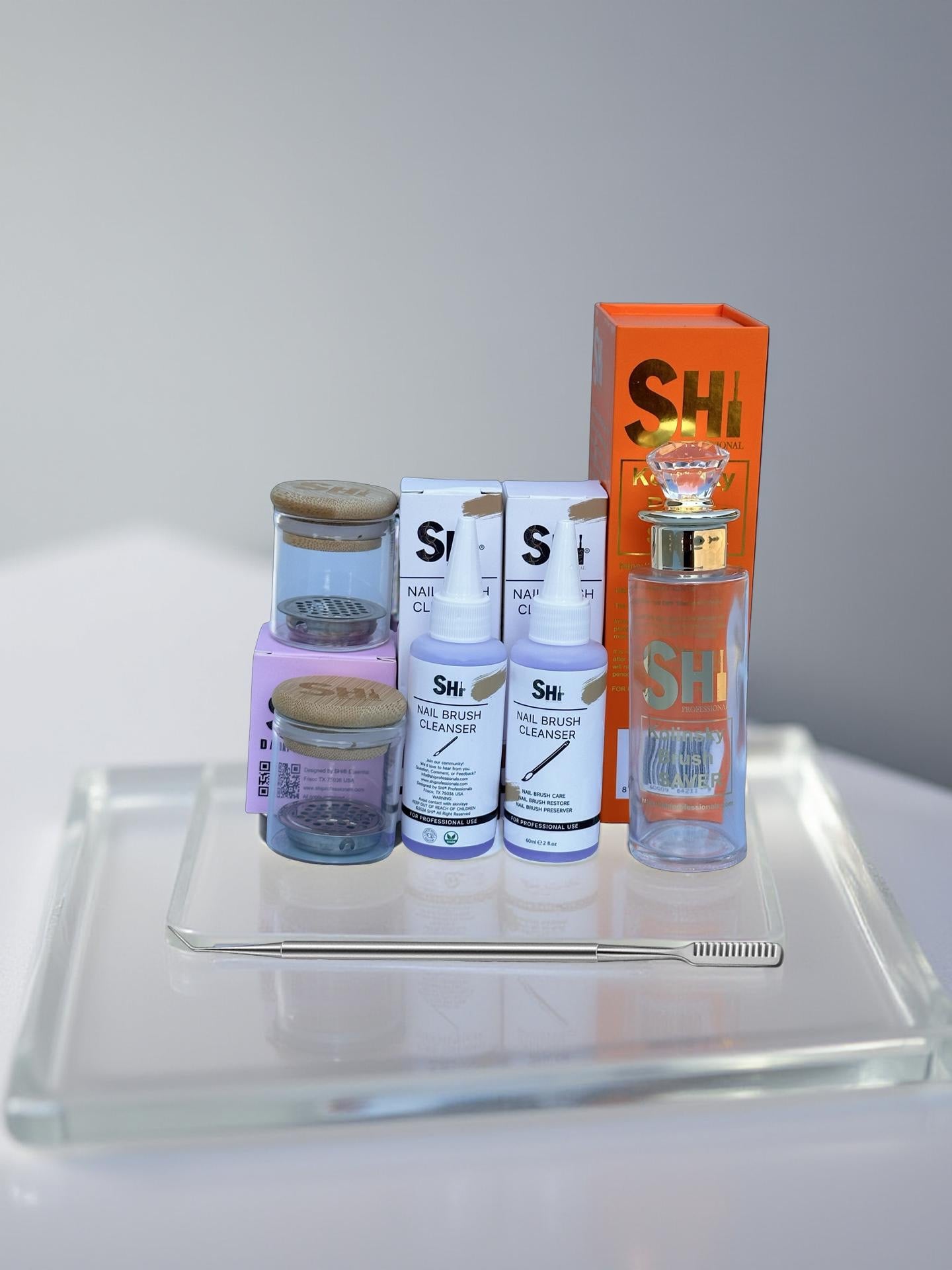
Instead of acetone, use brush cleaners made specifically for natural hair. These products are formulated to clean without breaking down the keratin structure. They lift away dried acrylic and product buildup while keeping the bristles healthy and intact. It's a small change, but it makes a massive difference in how long your brushes last.
Storage matters too. Store your brushes upright, not bristle-down in a cup. This prevents the bristles from bending permanently out of shape. And here's something most people don't think about: humidity. Keep your workspace at 40–50% humidity. When the air is too dry, bristle ends split and warp. When it's too humid, you create an environment where bacteria can grow. The sweet spot is right in the middle.
One more thing that extends brush life significantly: rotation. Don't overwork a single brush. Rotate through your set so each one gets a break between uses. This distributes the wear evenly and keeps performance consistent throughout your entire collection. Think of it like rotating your car tires. You get more life out of everything when you spread the load around.
E-File Bits: Sterilization Science That Actually Works
Now let's talk about e-file bits. This is where a lot of pros get it wrong too. Many nail techs think soaking bits in disinfectant is enough protection. It's not. Disinfectant kills surface germs, but it doesn't get into the tiny crevices where bacteria hide. Plus, soaking can actually damage the metal over time, making bits dull faster.
Here's what the science says works: autoclaving. This uses steam and pressure to kill germs without hurting the metal. An autoclave reaches temperatures and pressures that disinfectant can't match. It penetrates every tiny space on your bits and eliminates bacteria, viruses, and fungi completely. This is the gold standard for sterilization, and it's what professionals use in medical settings for a reason.
For everyday cleaning between autoclaving sessions, use an ultrasonic tank. These devices use sound waves to create tiny bubbles that blast away hidden debris. They get your bits cleaner than you could ever get them by hand. When you remove all that buildup, your bits run smoother. You get steady performance with less wear on the motor. Your clients get better results. Everyone wins.
The combination of ultrasonic cleaning and routine autoclaving is what keeps your tools working at their best. When you keep up both steps, your bits last longer and you get better results for every appointment. That's not just good practice—that's good business.
Pro Academy Best Practices: Building Your System
So how do you actually implement all this? The key is building a system that works for your studio and sticking to it. Here's what the pros do:
For Kolinsky brushes, set up a rotation schedule. If you have six brushes, use one per day and rotate through the week. This gives each brush time to rest and dry completely between uses. After each use, clean with a brush cleaner made for natural bristles. Never use acetone. Store clean brushes upright in a clean container. Check your humidity levels regularly and adjust if needed. This system takes maybe five minutes a day, but it extends the life of your brushes by months or even years.
For e-file bits, establish a cleaning and sterilization routine. After each client, do a quick rinse to remove visible debris. At the end of the day, put your bits in the ultrasonic tank for a deep clean. Once a week or once a month (depending on your volume), autoclave your entire bit collection. This ensures they're completely sterile and ready to go. Keep a log if you need to—it helps you stay consistent.
The investment in proper equipment pays for itself quickly. An ultrasonic tank and an autoclave aren't cheap, but they're cheaper than constantly replacing damaged tools. Plus, your clients will appreciate knowing that you're using proper sterilization methods. It builds trust.
Why This Matters for Your Business
At the end of the day, this is about more than just keeping your tools in good shape. It's about your reputation, your efficiency, and your bottom line. When your tools are properly maintained, you work faster and get better results. Your clients notice. They come back. They refer their friends. That's how you build a successful business.
SHi® Professionals makes tools engineered for performance. But that performance only lasts if you care for them the right way. Forget the shortcuts. Forget the myths. Focus on what science actually tells us works, and you'll see the difference immediately.
Your tools are an investment in your craft. Treat them that way, and they'll serve you well for years to come.


Dejar un comentario